
Game Details:
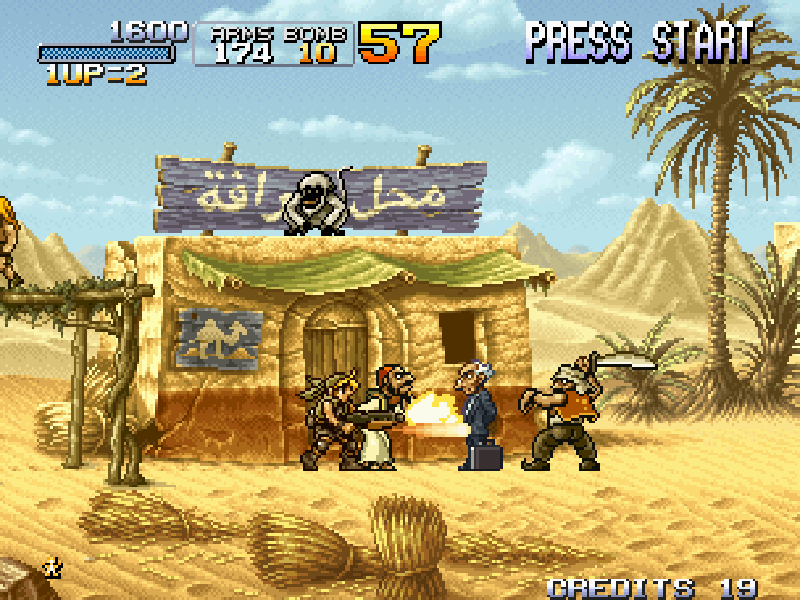
This game was created by the original Nazca team, developers of the Metal Slug series, giving it a distinct "arcade vibe" in its audio-visual presentation. The game forgoes complex, realistic simulation controls in favor of an intuitive and rhythmic power bar system: players only need to select their power and shot height with simple button presses, judging the wind to make their shot.
The game offers two main modes: Stroke Play is ideal for solo challengers aiming for the lowest possible score, while Match Play provides highly competitive fun for two-player duels. The six characters each correspond to different playstyles like "Power Hitter," "Technical," and "All-Rounder." Not only do they have unique appearances, but their power, technique, and putting accuracy also vary, greatly enhancing the game's replay value.
Game Guide:
Character Strategy:
Beginners should consider choosing "Shot Maker" from Germany or "Young Gun" from the USA. Their ball control is more precise, making them more forgiving. If you're looking for long drives, the "Technician" from the UK, despite the name, also boasts excellent power stats.
Adjusting for Wind:
The wind direction in the game significantly affects the ball's path. With a headwind, the ball's trajectory will be higher and the distance shorter; it's recommended to use a lower-numbered club or add more power. The opposite is true for a tailwind. With a crosswind, the ball will drift sharply, so you must compensate by adjusting your aim during the targeting phase.
Mastering the Height Gauge:
The second gauge (the height gauge) used when making a shot determines the ball's trajectory. A high-arc shot has a precise landing point but is easily affected by the wind, while a low-arc shot is better at cutting through wind and will roll farther on the ground. When approaching the green, mastering the "chip shot" can effectively reduce the ball's roll.
Putting on the Green:
Putting is the key to scoring. Pay close attention to the contour lines on the ground. The slope not only affects the ball's break but also significantly drains its momentum. For an uphill putt, be sure to use more power and try to keep the power bar in the middle to upper end of the recommended range.
User Reviews
Simulation Related Retro Games
More
The Legend of Sword and Fairy
MS-DOS
Theme Hospital
MS-DOS
Sangokushi
Game Boy Advance
Romance of the Three Kingdoms V
MS-DOS
Pokémon Platinum Version
Nintendo DS
FIFA 97
MS-DOS
Romance of the Three Kingdoms: The Legend of Heroes
MS-DOS
F1 Race
NES / Famicom
China
MS-DOS
Napoleon's War
NES / Famicom
Three Kingdoms Heroes Chronicles
MS-DOS
F1 Manager
MS-DOS
Sports Related Retro Games
More

Arcade Related Retro Games
More
Casual Related Retro Games
More
Snow Bros.
NES / Famicom
Bomberman
NES / Famicom
Rhythm Tengoku
Game Boy Advance
Super Mario Bros.
NES / Famicom
Galaxian
NES / Famicom
Super Mario World
SNES
Puzzle Bobble
Arcade
Hikaru no Go
Game Boy Advance
Pac-Man
Arcade
Chip 'n Dale: Rescue Rangers
NES / Famicom
Chinese Chess
NES / Famicom
Mario Kart: Super Circuit
Game Boy Advance