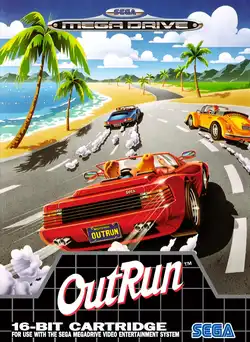
Game Details:
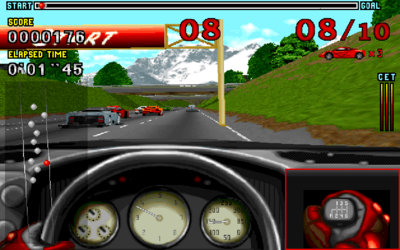
Originally released in 1986, OutRun defined the "driving game" genre, distinguishing itself from simple "racing games." The core appeal of the game lies in the sense of freedom and vacation-like atmosphere it provides: players can explore five different endings, with each route featuring unique natural landscapes, such as azure coastlines, desolate deserts, or ancient ruins. The game also pioneered an in-game radio system, and its three classic BGM tracks—"Magical Sound Shower," "Splash Wave," and "Passing Breeze"—are still revered as masterpieces by countless players today. Its profound influence not only impacted subsequent racing games but also serves as a major source of inspiration for today's Vaporwave and Cyberpunk aesthetics.
Game Guide:
Cornering & Speed Control Techniques:
The game's cornering mechanics don't require complex drifting, but throttle control is crucial. When approaching a sharp turn, it's recommended to quickly release and then re-apply the accelerator, or force a deceleration by rapidly shifting between High and Low Gear to hug the corner, thus avoiding collisions with roadside palm trees or billboards.
Route Selection Advice:
*OutRun*'s map has a branching structure. The left-hand routes are generally less difficult, with gentler scenery, making them suitable for beginners to get a feel for the controls. In contrast, the right-hand routes feature more sharp turns, slopes, and obstacles. If your goal is to finish the game, it's advisable to practice the left-hand branches frequently in the beginning.
Maintaining Top Speed:
Time is the player's greatest enemy. On straightaways, you must maintain the top speed of 293 km/h. When overtaking, you need to anticipate the movement patterns of AI vehicles and try to pass on the inside. Colliding with an AI car will cause a drastic loss of speed, wasting precious seconds.
Gear Management:
Always start in Low Gear. Once the RPMs increase, shift up to High Gear. If you crash and come to a stop, you must immediately shift back down to Low Gear to restart. Otherwise, the acceleration will be extremely slow, preventing you from reaching the next checkpoint in time.
Memorization:
Since the stage designs are fixed, memorizing the layout of turns before each junction will help you prepare to steer in advance, reducing errors caused by slow reaction times.