Romance of the Three Kingdoms V
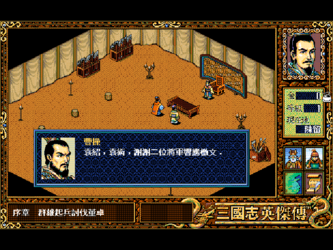
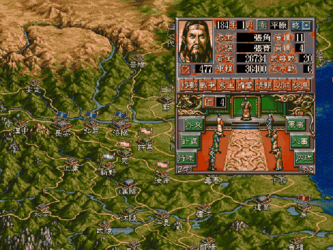
"Romance of the Three Kingdoms V" is a classic historical strategy game launched by Japan's KOEI in 1995, and is the fifth official installment in the "Romance of the Three Kingdoms" series.
Game Details:
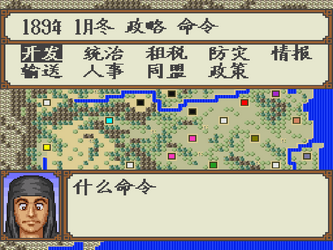
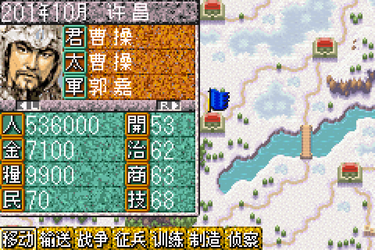
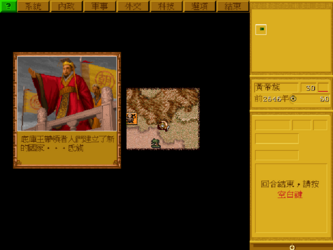
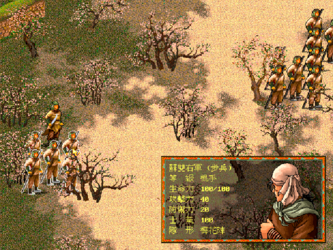
"Romance of the Three Kingdoms V" is a simulation strategy game that highly integrates military strategy, officer development, and government administration. This installment continues the style of its predecessors but is significantly optimized in many aspects: the map achieves seamless connection of large areas for the first time, and the combat mode transitions from grid-based to a plane sliding style, emphasizing troop positioning and mobility more; the game adds the "Advisor" command system and the concept of "Command Points" during battles, requiring players to reasonably allocate action priorities. Internal affairs focus more on "talent strategy" and "city development." The game supports up to 40 selectable scenario factions and offers rich "historical event" cutscenes. Furthermore, the AI in "Romance of the Three Kingdoms V" is more intelligent, with enemies actively attempting encirclements, defenses, defections, sieges, etc., greatly enhancing the challenge.
Editor's Recommendation:
If you are an old player of the "Romance of the Three Kingdoms" series or a strategy game enthusiast, then "Romance of the Three Kingdoms V" is definitely worth playing. Not only is the gameplay more refined, but the graphics are also more gorgeous, and the music is more imbued with Chinese classical charm, creating a rich Three Kingdoms atmosphere. The biggest highlight of this installment is the "sliding combat," which bids farewell to the previous turn-based grid system, enhancing the fluidity and real-time strategic nature of battles. At the same time, the advisor system and tactical use of strategies are also extremely crucial, and reasonable use of advisors can turn the tide of battle. In addition, it is relatively easy for new players to get started, making it one of the most balanced and mature installments in the series.
Game Guide:
1. Initial City Selection Strategy
It is recommended for beginners to start with factions like Liu Bei or Cao Cao, which have balanced development. Initial cities should prioritize "population," "commerce," and "public order" to ensure financial and food supply.
2. Officer Configuration and Division of Labor
Officers are assigned roles based on "Intelligence," "Force," and "Leadership"—intelligent officers for internal affairs and strategy, strong officers for offense and defense, and commanding officers for leading troops effectively. Reasonable allocation enhances efficiency.
3. Effective Use of the Advisor System
Appoint highly intelligent officers as advisors (e.g., Zhuge Liang, Guo Jia). During battles, they can use strategies like fire attacks, floods, rockfalls, and ambushes, which can sometimes turn the tide of battle. Remember to assign the advisor to accompany the army to use their skills.
4. Command Points and Tactical Rhythm
"Command Points" limit the number of actions in battle. Allocate them reasonably: prioritize attacking the enemy commander or supply wagons, use fire attacks on concentrated enemy troops, and protect your own advisor or commander.
5. Diplomacy and Internal Discord
After stable internal development, use diplomatic strategies like "incite," "provoke," and "form alliances" to weaken enemy factions. This is particularly effective against strong AI like Cao Cao and Sun Quan.